Crude Oil Price by oil-price.net

Oil and Gas Energy News Update

Showing posts with label rigs. Show all posts

Wednesday, September 7, 2011

All Evacuated Personnel nearly Returned - BOEMRE

- All Evacuated Personnel nearly Returned - BOEMRE

Wednesday, September 07, 2011
BOEMRE

Offshore oil and gas operators in the Gulf of Mexico are re-boarding platforms and rigs, and restoring production following Tropical Storm Lee. The Bureau of Ocean Energy Management, Regulation, and Enforcement (BOEMRE) Hurricane Response Team is monitoring the operators' activities. The team will continue to work with offshore operators and other state and federal agencies until operations return to normal.

Based on data from offshore operator reports submitted as of 11:30 a.m. CDT Wednesday, personnel remain evacuated from a total of 21 production platforms, equivalent to 3.4 percent of the 617 manned platforms in the Gulf of Mexico. Production platforms are the structures located offshore from which oil and natural gas are produced. Unlike drilling rigs, which typically move from location to location, production facilities remain in the same location throughout a project's duration

Personnel have been evacuated from 4 rigs, equivalent to 5.7 percent of the 70 rigs currently operating in the Gulf. Rigs can include several types of self-contained offshore drilling facilities including jackup rigs, submersibles and semisubmersibles.

As part of the evacuation process, personnel activate the applicable shut-in procedure, which can frequently be accomplished from a remote location. This involves closing the sub-surface safety valves located below the surface of the ocean floor to prevent the release of oil or gas. During the recent hurricane seasons, the shut-in valves functioned 100 percent of the time, efficiently shutting in production from wells on the Outer Continental Shelf and protecting the marine and coastal environments. Shutting-in oil and gas production is a standard procedure conducted by industry for safety and environmental reasons.

From operator reports, it is estimated that approximately 36.9 percent of the current oil production in the Gulf of Mexico has been shut-in. It is also estimated that approximately 18.1 percent of the natural gas production in the Gulf of Mexico has been shut-in. The production percentages are calculated using information submitted by offshore operators in daily reports. Shut-in production information included in these reports is based on the amount of oil and gas the operator expected to produce that day. The shut-in production figures therefore are estimates, which BOEMRE compares to historical production reports to ensure the estimates follow a logical pattern.

After the storm has passed, facilities will be inspected. Once all standard checks have been completed, production from undamaged facilities will be brought back on line immediately. Facilities sustaining damage may take longer to bring back on line. BOEMRE will continue to update the evacuation and shut-in statistics at 1:00 p.m. CDT each day as appropriate.

Oil & Gas Post

Promote Your Page Too
LINK

Monday, September 5, 2011

BOEMRE: Operators Evacuate Ops in GOM

- BOEMRE - Operators Evacuate Ops in GOM

Monday, September 05, 2011
BOEMRE

Offshore oil and gas operators in the Gulf of Mexico are evacuating platforms and rigs in the path of Tropical Storm Lee. The Bureau of Ocean Energy Management, Regulation, and Enforcement (BOEMRE) Hurricane Response Team is monitoring the operators' activities. The team will continue to work with offshore operators and other state and federal agencies until operations return to normal and the storm is no longer a threat to Gulf of Mexico oil and gas activities.

Based on data from offshore operator reports submitted as of 11:30 a.m. CDT Sunday, personnel have been evacuated from a total of 239 production platforms, equivalent to 38.7 percent of the 617 manned platforms in the Gulf of Mexico. Production platforms are the structures located offshore from which oil and natural gas are produced. Unlike drilling rigs, which typically move from location to location, production facilities remain in the same location throughout a project's duration

Personnel have been evacuated from 25 rigs, equivalent to 35.7 percent of the 70 rigs currently operating in the Gulf. Rigs can include several types of self-contained offshore drilling facilities including jackup rigs, submersibles and semisubmersibles.

As part of the evacuation process, personnel activate the applicable shut-in procedure, which can frequently be accomplished from a remote location. This involves closing the sub-surface safety valves located below the surface of the ocean floor to prevent the release of oil or gas. During the recent hurricane seasons, the shut-in valves functioned 100 percent of the time, efficiently shutting in production from wells on the Outer Continental Shelf and protecting the marine and coastal environments. Shutting-in oil and gas production is a standard procedure conducted by industry for safety and environmental reasons.

From operator reports, it is estimated that approximately 60.2 percent of the current oil production in the Gulf of Mexico has been shut-in. It is also estimated that approximately 44.3 percent of the natural gas production in the Gulf of Mexico has been shut-in. The production percentages are calculated using information submitted by offshore operators in daily reports. Shut-in production information included in these reports is based on the amount of oil and gas the operator expected to produce that day. The shut-in production figures therefore are estimates, which BOEMRE compares to historical production reports to ensure the estimates follow a logical pattern.

After the hurricane has passed, facilities will be inspected. Once all standard checks have been completed, production from undamaged facilities will be brought back on line immediately. Facilities sustaining damage may take longer to bring back on line. BOEMRE will continue to update the evacuation and shut-in statistics at 1:00 p.m. CDT each day as appropriate.

Oil & Gas Post

Promote Your Page Too
LINK

Monday, August 29, 2011

Beach Secures Rigs for Shale Gas Plays in Cooper Basin

- Beach Secures Rigs for Shale Gas Plays in Cooper Basin

Monday, August 29, 2011
Beach Energy Ltd.

Beach has secured two Ensign rigs, Ensign#65 and Ensign#16, to drill both horizontal and vertical wells targeting its unconventional gas play in the Nappamerri Trough of the Cooper Basin. From recent drilling results, it is clear that the target zone in PEL 218 (Beach 90%) goes beyond shale and incorporates other lithologies that are also gas saturated. Beach believes, that in addition to the substantial shale gas potential, it is now dealing with an unconventional basin centered gas play.

The 2012 program for these rigs will focus on pilot horizontal production wells in both ATP 855P (Beach 40%) and PEL 218, as well as a series of vertical delineation wells in PEL 218. The program is designed to test the significant potential of the basin centered play in what is now considered a thick, continuous, multi lithology gas accumulation across the PEL 218 permit and potentially ATP 855P.
Details of the rigs and the two separate programs are as follows:

Ensign#65 (ADR1500):
  • New build 1,500 horsepower rig out of Canada and the US which is expected to arrive around April 2012;
  • Encompasses the latest proven technology being used for drilling horizontal wells in the Haynesville shale province in the US;
  • Will be built to meet Australian standards and conditions and has the capability to drill 1,500 meter laterals from a depth of 4,000 meters; and
  • Will drill the first horizontal well in ATP 855P to target shale and other lithology target zones. Upon completion of this well, the rig will commence the horizontal pilot well program in PEL218, with two pilot horizontal wells planned adjacent to Holdfast-1 and Encounter-1.

Ensign#16:
  • 1,200 horsepower rig used to drill Holdfast-1 and Encounter-1, which is currently in the Officer Basin and expected to be available around January 2012;
  • Will drill a series of vertical wells in PEL 218 to continue the evaluation of the continuous basin centred gas play in the permit; and
  • Has the capability of drilling to 4,270 meters, with the vertical program set to increase the size of the resource in PEL 218 beyond the initial booking of 2 trillion cubic feet. This booking relates to a restricted area of 100km2 around each of Holdfast-1 and Encounter-1.

Beach Managing Director Reg Nelson said, “Beach has started to unlock a significant basin centred unconventional gas play in the Cooper Basin. These two rigs will take us a step closer to understanding the extent of the gas resource that resides within our permits. The horizontal pilot wells to be drilled by Ensign#65 will be production style wells designed to flow gas at commercial rates. Should these wells be successful we will seek to commence a pilot development program as soon as possible.”
  • PEL 218 (Permian JV): Beach (90% and Operator), Adelaide Energy Ltd (10%)
  • ATP 855P: Beach (40% and Operator), Icon Energy Ltd (40%) and Adelaide Energy Ltd (20%)

Oil & Gas Post

Promote Your Page Too
LINK
Thursday, August 18, 2011

Gas Boom Or Not, More Oil Rigs Now

- Gas Boom Or Not, More Oil Rigs Now

Thursday, August 18, 2011
Houston Chronicle
by Tom Fowler

Natural gas drilling has been the dominant energy story in the U.S. for the past few years, but oil is back with a vengeance.

For the first time in 18 years, the number of oil rigs working in the U.S. has exceeded the number of natural gas rigs, according to July rig data compiled by IHS-CERA, covering both land and offshore rigs.

By 2020 this surge in oil drilling could increase U.S. oil production by as much as 3 million barrels per day, Peter Stark, head of IHS-CERA's industry relations said Wednesday during a session launching the start of Summer NAPE, the semi-annual oil and gas prospects expo being held in Houston.

Two factors are spurring the surge in oil production.

The combination of horizontal drilling and hydraulic fracturing, which has unlocked previously inaccessible gas, also has opened up new possibilities for oil production.

Relatively low natural gas prices have prompted companies to focus exploration efforts on more valuable oil and natural gas liquids.

Oil actually may have returned to the top of the heap among U.S. drilling rigs earlier this year, according to another data set. Baker Hughes' rig count for onshore and offshore rigs has oil surpassing natural gas on April 21, (913 oil rigs vs. 878 gas rigs) for the first time since April 28, 1995 (343 oil rigs vs. 321 gas rigs).

And on June 24 the number of rigs drilling for oil surpassed the 1,000 mark for the first time since 1987.

IHS-CERA predicts oil production could directly and indirectly generate another 1.3 million U.S. jobs over the next decade and raise an additional $97 billion in federal taxes and royalty payments.

The oil boom is showing up in well-known U.S. oil fields, like Texas' Permian Basin, and in newer fields like North Dakota's Bakken shale and the Utica shale in Ohio.

The surge could slow if natural gas prices continue to rise and make gas projects more attractive -- which many analysts expect in the next year.

Benchmark crude rose 93 cents Wednesday to $87.58 per barrel in trading on the New York Mercantile Exchange. Natural gas rose a penny to $3.93 per million British thermal units.

But at least for now, producers have reasons beyond crude and gas prices for renewed interest in oil.

In some cases drilling for oil can cost less than for gas. Tom Ward, CEO of SandRidge Energy, said his company is spending as little as $760,000 per well in the Central Basin field in the Permian, compared to several million per well in most shale gas fields.

John Christmann, head of Apache Corp.'s Permian Basin operations, said his company has acquired acreage in the Empire ABO field in the Permian, a field where no new wells have been drilled since 1984.

"In some cases you have million-barrel wells that have never had an offset drilled near them," Christmann said, seeing strong potential for large quantities of oil.

Oil shales will be a big topic on the floor of NAPE this year, as attendees assess potential oil and gas drilling and production projects.

Started in 1993 as the North American Prospect Expo with 80 booths and about 800 attendees, NAPE is now held twice a year, and the winter 2011 gathering in Houston had 1,600 booths and drew 16,000 attendees.

This week's Summer NAPE is expected to draw about 5,600 attendees and 600 booths.

Scott Wilmoth, a vice president at Houston investment bank Simmons & Co., said NAPE gives big firms and small a chance to see a lot of different deals in one place.

"Deals get done across the board," Wilmoth said.

NAPE is also a networking opportunity, said Charles Cusack, Petrohawk's Vice President of Exploration.

"The main benefit has been the multitude of contacts made at NAPE that have indirectly led to deals," Cusack said. "The most significant NAPE transaction was my first meeting Dick Stoneburner (Petrohawk's chief operating officer) at NAPE in 2000 that led to my working with him for over a decade."

Wilmoth expects a lot of discussion at NAPE about tight oil plays, including the Utica, the Lower Smackover Brown Dense in Arkansas and Louisiana, the Tuscaloosa Marine Shale and horizontal Wolfcamp in the Permian basin, among others.

The shale gas plays will still get attention, however -- including the areas in the Eagle Ford that yield oil and natural gas liquids, and the Marcellus shale in the northeast U.S., Wilmoth said. Internationally, unconventional oil and gas opportunities in Argentina may be a big draw at NAPE as well.

While the business is famously cyclical, the recent oil boom surprised some in the industry.

During a recent meeting of the National Petroleum Council in The Woodlands, the group discussed an upcoming report on U.S. natural gas reserves. Not surprising, the group said, the study would report that North American natural gas resource potential was enormous.

"Secondly, and perhaps surprisingly to some of us and certainly to many Americans, our Canadian and American oil resource base is also very big news," said NPC member Susan Tierney.

Copyright (c) 2011, Houston Chronicle

Oil & Gas Post

Promote Your Page Too
LINK

Monday, August 8, 2011

Noble Briefs New Contracts, Contract Extension for Rigs

- Noble Briefs New Contracts, Contract Extension for Rigs

Monday, August 08, 2011
Noble Corp.

Noble has been awarded a contract for the semisubmersible rig Noble Paul Romano and received a contract extension on the semisubmersible rig Noble Max Smith, two rigs located in the Gulf of Mexico. In addition, the Company has been awarded a contract for the jackup rig Noble George Sauvageau operating in the Southern sector of the North Sea.

The Noble Paul Romano has been awarded a six well, approximately 180-day contract by Gujarat State Petroleum Corporation Ltd. (GSPC) for operations offshore Egypt at a dayrate of $325,000, excluding mobilization revenues. The rig, which has been idle in the U.S. Gulf of Mexico since June 2010, is expected to commence the new contract in October 2011, following mobilization to an initial drilling location in the Eastern Mediterranean Sea. The contract could be extended for up to four optional wells. The Noble Paul Romano is a Noble EVA 4000, conventionally moored deepwater semisubmersible rated to operate in water depths of up to 6,000 feet.

Also, the Noble Max Smith, operating offshore Mexico for Pemex Exploracion y Produccion (PEMEX), has received a five-month extension of its current contract. The extension commenced in August 2011 at a dayrate of $380,000. The Noble Max Smith is a Noble EVA 4000, conventionally-moored deepwater semisubmersible capable of operating in water depths of up to 7,000 feet. The rig has operated offshore Mexico since August 2008.

In addition, the Company reported that the semisubmersible rig Noble Driller commenced its full operating dayrate of $383,000 on August 1, 2011 and has mobilized to an operating location in the U.S. Gulf of Mexico. The rig is under contract through June 2013.

Finally, the Noble George Sauvageau has been awarded a one-year contract by Wintershall for operations in the Southern sector of the North Sea at a dayrate of $115,000. The rig is now firmly committed through 2012.

Oil & Gas Post

Promote Your Page Too
LINK

Friday, August 5, 2011

About to Buck The Trend

- About to Buck The Trend

Friday, August 05, 2011
Rigzone Staff
by Trey Cowan

Looking back to the second quarter, the jackup dayrate trend is down 2 percent to $106k/day versus 1Q11 rates. Floaters on the other hand did not experience any change in pricing from one quarter to the next, holding steady at $378k/day.

Commodity jackup dayrates suffered the most, down 5.6 percent to an average of $70k/day during 2Q. Standard jackup rates fell 2.2 percent to 96k/day and premium jackup rigs fell at the slowest pace of 1.6 percent to $135k/day, all on a quarter-over-quarter basis.

While the chart shows an ongoing downward trend, the future actually looks good for jackup rate improvement, based on recent activity. Jackup rates for July improved 1 percent to $107k/day, up $1,000 from June's average of $106k/day. When looking at capabilities and water depths served, premium jackups grew at a faster pace (3 percent to 139k/day) during the month. We continue to hear commentary pointing to a bifurcated marketplace with higher demand for premium rigs relative to standard 300' rigs or commodity rigs that serve in 250' waters or less.


Based on contracts already booked, dayrates for premium jackups are likely to improve 8 percent during the second half of 2011. This compares favorably to 4 percent overall growth in dayrates anticipated for jackups, which translates into an average increase of 5,000/day for jackups during the second half of 2011.

Looking solely at the rig counts, global offshore activity improved during the month of July when compared to June. There are now 543 rigs under contract around the world, up ten from last month (as both floaters and jackups added 5 rigs-a-piece to their respective rolls). The overall fleet size also grew during the month by a net five rigs (3 floaters and 2 jackups) to 756 rigs marketed globally.

Permitting in the Gulf of Mexico Year to Date

In water depths of less than 500 feet, there have been 41 "New Well" permits issued by the BOEMRE year-to-date. "Revised New Well" permits number 64 that have been issued since January 3rd 2011. The average pace for New Well and Revised New Well permit approvals appears to be 15 per month in shallow waters. In water depths of more than 500 feet there have been 12 New Well permits issued by the BOEMRE year-to-date. Since Jan. 3, 52 Revised New Well permits have been issued by the BOEMRE. Thus, the average pace for New Well and Revised New Well permit approvals for deepwater projects is 9 per month.

To put all this into perspective, combine the two averages together and you see that the BOEMRE is averaging 24 approvals per month. This is an anemic pace considering that the inspection staff of the BOEMRE is ~50 individuals and growing. That means at the current staff levels the BOEMRE's inspectors are approving either a "New Well" or "Revised New Well" at a pace of one every two months.

Oil & Gas Post

Promote Your Page Too
LINK

Friday, July 15, 2011

Magnum Hunter Buys New Rigs

- Magnum Hunter Buys New Rigs

Friday, July 15, 2011
Magnum Hunter Resources Corp.

Magnum Hunter announced that the Company's Appalachian Basin Division has acquired two new 2011 Schramm T200XD trailer mounted hydraulic drilling rigs ("Schramm Rigs") with a rated vertical working depth capacity of 9,000 feet. The two new Schramm Rigs will join the existing Alpha Hunter Drilling LLC ("Alpha Hunter") drilling rig fleet comprised of three Schramm T130 rigs.

All five of Alpha Hunter's drilling rigs are under term contracts with third parties who are operators active in the Pennsylvania and northwestern West Virginia Marcellus Shale region. When Magnum Hunter acquired Triad Energy early last year out of bankruptcy, the three existing Schramm Rigs were part of the overall acquisition. Alpha Hunter has been successful in contracting its rig fleet out on an improving day rate basis since last year. The existing drilling rig fleet have been primarily used to drill the vertical top hole sections for Marcellus Shale wells for third parties and for Triad Hunter LLC. These two Schramm Rigs can not only drill the surface holes, but they can also perform the directional drilling operations in unconventional resource shales in this region. They are equipped with automatic pipe handling systems, have unparalleled mobility and utilize the smallest footprint available in the market today. Due to the mountainous terrain in Appalachia, utilizing pad drilling and minimizing surface locations significantly reduce the location cost of each well.

The two new drilling rigs (including drill pipe) are being purchased for approximately $5.8 million and are being financed under a secured commercial bank term loan.

Management Comments

Mr. Kirk Trosclair, Senior Vice President of Equipment Services for Triad Hunter LLC, commented, "The addition of the two new Schramm Rigs recently acquired will expand Alpha Hunter Drilling's ability to provide top of the line, safety oriented, and cost effective contract drilling services for our Appalachian exploration and production customers. Additionally, Triad Hunter will receive the benefit of having an internal source for oilfield service equipment, supplies and drilling rigs available to draw upon and utilize as we expect the markets for this specialized equipment to continue to be extremely tight over the next several years. We believe adding these two high quality drilling rigs to our existing three rig fleet will allow Triad Hunter the greatest amount of operational flexibility in providing for our Company's internal needs as well as third parties."

Oil & Gas Post

Promote Your Page Too
LINK

Thursday, July 7, 2011

GeoPark All Smiles over 2Q Operations

- GeoPark All Smiles over 2Q Operations

Thursday, July 07, 2011
Geopark Holdings Ltd.

GeoPark provided an operations update for the Second Quarter 2011. Financial results for the interim period ended June 30, 2011 will be released during September 2011.

Summary

During 2011, GeoPark is carrying out an aggressive 26-30 well drilling and investment program with expectations of achieving its sixth successive year of continuous performance growth. Currently, GeoPark's assets and operations include:
  • Six petroleum blocks (operated by GeoPark) in Chile and Argentina covering a gross area of approximately 3.8 million acres - with a balanced portfolio of production, development and high-impact exploration opportunities.
  • Proved and probable (2P) reserves of 49.6 million barrels of oil equivalent (boe).
  • Current oil and gas production of approximately 8,000 barrels of oil equivalent per day (boepd).
  • Fully-funded 2011 work program of US $80-90 million with three rigs in operation.
  • Cash of approximately US $150 million and a strategic partnership with LG International from Korea to support new project acquisitions.
  • Proven technical and management team built for expansion.

Drilling Performance
  • Drilling operations resumed in late February 2011 on the Fell Block in Chile after the late arrival of a drilling rig and since that time GeoPark has drilled or is currently completing the drilling of nine wells - of which six have been completed, with four being put on production, and three wells are remaining to be completed and tested.
  • Results of new wells are summarized below:

Well Geological Formation Depth (Meters) Principal Hydrocarbon Current Status Approximate Production
Nika Sur 2 (Fell Block) Springhill 2,983 Gas/Oil Suspended --
Monte Aymond 35 (Fell Block) Springhill 2,404 Gas On Production 8.8 mmscfd gas 100 bpd condensate
Copihue 1 (Fell Block) Springhill 2,472 Gas On Production 8.1 mmscfd gas 160 bpd condensate
Williche 1 (Fell Block) Springhill 3,074 Gas/Oil Waiting on Further Evaluation --
Monte Aymond 36 (Fell Block) Springhill 2,551 Oil On Production 12 bopd
Konawentru 1 (Fell Block) Tobifera 3,030 Oil On Production 2,000 bopd
Alakaluf 10 (Fell Block) Springhill 2,296 Oil On Completion Testing Beginning
Municion Oeste 2 (Fell Block) Springhill -- Gas/Oil Drilling Not Yet Reached Objective
Renoval 1 (Tranquilo Block) Morro Chico -- Gas Drilling Not Yet Reached Objective


Recent wells to be noted include the Konawentru 1 well which had an initial short term test in excess of 2,000 bpd of oil from the Tobifera formation (a non-conventional volcanic clastic formation underlying the Springhill) and the Williche 1 well which had an inconclusive well test with only minor hydrocarbons recovered and is now under further evaluation.
  • Renoval 1, the first well to be drilled on the Tranquilo Block in Chile, has reached total depth of 3,027 meters and is now being logged and completed. Renoval 1 is targeting a 715 bcf (unrisked mean resources) prospect.

Seismic Operations
  • Seismic data acquisition on the Tranquilo and Otway Blocks continued throughout the first half of 2011 - with 293 km of 2D seismic and 165 km2 of 3D seismic being shot in total. Additional seismic will be carried out in Otway during 4Q11.
  • Geophysical processing and interpretation of these surveys are now underway to develop additional drilling prospects on these high potential blocks.

Production Performance
  • GeoPark's oil and gas production increased to approximately 8,000 barrels of oil per day equivalent (boepd) at the end of June led by the drilling results detailed above -- with an average for the first half of 2011 of approximately 6,400 boepd. For the first half of the year, oil production averaged approximately 1,600 bpd of oil and gas production averaged 29 mmscfd of gas.
  • GeoPark continued to invest in surface facilities to commercialize its drilling successes on the Fell Block and render its operations more efficient by continuing implementation of its performance management processes.

Strategic Developments and New Project
  • GeoPark closed the sale of a 10% stake in its Chilean upstream business to LG International for US $70 million in May 2011. This development cements the strategic relationship between GeoPark and LGI, demonstrates the value of the business GeoPark has built in Chile and creates a strong foundation for a significant expansion of GeoPark's footprint in Latin America.
  • As part of its partnership with LGI to acquire a portfolio of upstream assets throughout Latin America, GeoPark has been actively reviewing a range of asset and corporate opportunities, from a risk-reward and shareholder value creation perspective, in Chile, Colombia, Peru, Brazil and Argentina.
  • Consistent with its objective of building access to multiple capital markets, GeoPark is evaluating the possibility of a full listing on the Santiago Stock Exchange in Chile.

Commenting, James Park, Chief Executive Officer, said, "We are pleased with our continuing progress and improvement during the Second Quarter, including the impactful Konawentru discovery, and look forward to further results throughout the remainder of the year from our active drilling program. Importantly, GeoPark has now positioned itself with, and provided funding for, three exciting growth platforms: 1. steady low risk organic growth from the Fell Block; 2. high-impact exploration opportunities from the Tranquilo and Otway Blocks; and 3. new project acquisitions in Latin America."

Oil & Gas Post

Promote Your Page Too
LINK

Wednesday, July 6, 2011

Laredo Finalizes Broad Oak Acquisition

- Laredo Finalizes Broad Oak Acquisition

Wednesday, July 06, 2011
Laredo Petroleum Inc.

Laredo Petroleum has now completed the previously announced acquisition of Broad Oak.

The aggregate consideration paid was approximately $1 billion and consisted of approximately 2/3 of newly issued units of Laredo equity and 1/3 cash. The cash portion of the transaction was funded under Laredo's amended and restated $1 billion bank credit facility led by Wells Fargo Securities, LLC, BofA Merrill Lynch and J.P. Morgan Securities LLC, as joint lead arrangers. The amended and restated bank credit facility has an initial borrowing base of $650 million, of which $500 million was borrowed and outstanding following the closing of the acquisition.

This acquisition increases Laredo's size and positions it for continued growth in the oil-rich Permian Basin and the liquids-rich Granite Wash play. On a pro forma basis giving effect to the acquisition, Laredo has:
  • total proved reserves of 840 Bcfe, consisting of 49 million barrels of crude oil and 547 Bcf of natural gas, as of March 31, 2011;
  • average daily combined production of 130 MMcfe for the three months ended March 31, 2011, consisting of 40% crude oil and 60% natural gas plus associated natural gas liquids;
  • a land position consisting of approximately 489,000 gross acres (338,000 net acres); and
  • a total of 12 operated drilling rigs running, with eight drilling vertical wells and four drilling horizontal wells. Ten of these rigs are working in the Permian Basin and two in the Granite Wash play located in the Anadarko Basin.

The Broad Oak properties are concentrated on a contiguous land position located in the Permian Basin of West Texas primarily in Reagan County. This acreage is immediately south of, and on trend with Laredo's existing Permian Basin properties in Howard and Glasscock Counties. The combined acreage position in the Permian Basin consists of approximately 166,000 gross acres (126,000 net acres).

Randy Foutch, Laredo's Founder, Chairman and CEO said, "We welcome the Broad Oak employees to the Laredo team and intend to continue the active development and exploration of the combined company's attractive property base."

Tudor, Pickering, Holt & Co. Securities, Inc. served as financial advisor to Laredo. J.P. Morgan Securities LLC served as financial advisor to Broad Oak.

Oil & Gas Post

Promote Your Page Too
LINK

Union Drilling Enters Multi-Year Contract for New Rigs

- Union Drilling Enters Multi-Year Contract for New Rigs

Wednesday, July 06, 2011
Union Drilling Inc.

Union Drilling has entered into contracts to purchase two new drilling rigs based upon executed three-year contracts with a long-standing customer. The 1,500 horsepower AC electric drilling rigs, designed for pad drilling and efficient rig moves, have an aggregate cost of approximately $35 million. Upon completion, which is expected in the first quarter of 2012, the rigs will be deployed to Arkansas for work in the Fayetteville Shale.

Christopher D. Strong, Union Drilling's President and Chief Executive Officer, stated, "This type of investment is exactly what we had in mind when we entered into an expanded revolving credit facility earlier this year. These two new rigs represent an excellent opportunity to generate attractive returns for our shareholders while expanding our relationship with a key customer."

Since January 2011, the Company has added two 1,000 horsepower rigs to its fleet and two more 1,000 horsepower rigs are expected to be completed for operations in the Marcellus Shale by the end of 2011.

Oil & Gas Post

Promote Your Page Too
LINK

Tuesday, June 28, 2011

N. Dakota Official: Floods Have Idled 5 Rigs, Shut Down 45 Wells

- N. Dakota Official: Floods Have Idled 5 Rigs, Shut Down 45 Wells

Tuesday, June 28, 2011
Dow Jones Newswires
HOUSTON
by Angel Gonzalez

Bad weather, flooding and road restrictions are disrupting oil production in North Dakota, shutting down the transportation by rail of 50,000 barrels a day of crude, a state official said.

"No one was prepared to deal with floods that are breaking records set 130 years ago," said Lynn D. Helms, director of the North Dakota Industrial Commission's Department of Mineral Resources said in an e-mail sent late Monday. Helms said the temporary shutdown of the rail transportation will last until it can be re-routed west, but didn't give an estimate as to when that might occur.

The weather has forced the shut in of 45 wells and idled five drilling rigs and is delaying the arrival of service crews to 500 wells waiting to be fractured, Helms said.

North Dakota sits atop the Bakken Shale, one of the richest deposits of oil in the U.S.--but one that requires intensive fracturing activity to yield crude. Last year, it produced an average of about 307,000 barrels of oil per day.

Michael Marino, an analyst with the investment bank Stephens, said moving drilling supplies in and crude out of the oil patch is the main problem in the Bakken.

"Overall the biggest impact has been on the (exploration and production companies)trying to get oil out of the region because service companies have been able to work around issues to some extent," he said.

Bad weather and flooding have affected not only energy production, but also the agricultural sector and have severely damaged several cities, including Minot, in the western part of the state, where many residents had to evacuate.

Copyright (c) 2011 Dow Jones & Company, Inc.

Oil & Gas Post

Promote Your Page Too

Thursday, June 9, 2011

Trinidad Drilling Sells Service Rigs

- Trinidad Drilling Sells Service Rigs

Thursday, June 09, 201
Trinidad Drilling Ltd.

Trinidad Drilling has entered into an agreement to sell its well servicing rigs and related equipment (TWS) to Central Alberta Well Services Corp. (CWC) for $38 million in cash, excluding positive working capital.

Well servicing has been an important part of Trinidad's operations for more than ten years and has provided a level of diversification as the Company has grown its contract drilling business. Trinidad now operates more than 120 drilling rigs across North America, providing broad geographic diversification and reducing the need for the diversification added by the well servicing division.

"As well servicing has become a less significant part of our overall business, we needed to invest capital to grow this division or to narrow our focus more tightly towards contract drilling," said Lyle Whitmarsh, Trinidad's President and Chief Executive Officer. "Our growth over past few years has largely been through adding deep, technically advanced drilling rigs and we have developed a reputation as an industry leader in this area. Our decision to sell our well servicing assets reflects our strategy to focus on the deep, modern contract drilling market where returns are generally stronger and where we see opportunities for future growth."

Trinidad's well servicing division has 22 well servicing rigs operating from three centers in Alberta. The well service fleet is made up of:
  • Two skid doubles
  • Six mobile free standing class III singles
  • Five mobile class III doubles
  • Two mobile class III free standing doubles
  • Seven mobile free standing class II singles

CWC has agreed to purchase all 22 of TWS's service rigs and anticipates that they will retain the vast majority of employees currently working for TWS. The sale is expected to close on June 15, 2011. Trinidad expects to use the proceeds from the sale to fund the growth of its deep, technically advanced drilling fleet or to reduce overall corporate indebtedness.

Oil & Gas Post

Promote Your Page Too

Monday, May 23, 2011

Statoil Secures AGR's RMR for GOM Rigs

- Statoil Secures AGR's RMR for GOM Rigs

Monday, May 23, 2011
AGR Group ASA

AGR and Statoil have joined forces to push the limits of Riserless Mud Recovery technology even further.

The international energy company has signed an agreement for AGR's RMR for two deep-water rigs it has under contract in the Gulf of Mexico. AGR Drilling Services' Houston team will handle RMR operations.

Statoil has already successfully used the RMR in the GoM. That particular operation, conducted from the Discoverer Americas drillship, was on the Krakatoa well in the Mississippi Canyon block at a depth of more than 620m (2,000ft).

This latest deal with Statoil will see AGR's existing technology further enhanced to cope with the ever increasing water depths faced by Statoil in the GoM.

RMR® has made an indelible impact on the offshore industry since it was introduced. More than 140 wells have been drilled with the system. It allows the top-hole section of a well to be drilled more safely and more quickly yet with less impact on the environment.

Terry Scanlon, Senior Vice President AGR Drilling Services Americas, said, "We are continuing to further develop our RMR® technology and systems capability to be able to support Statoil in deeper water depths in the Gulf of Mexico.

"Signing this agreement with Statoil in Houston, coupled with our new strategic agreement with Statoil in Norway, gives us even stronger confidence that we are investing in our technology with a partner for the future, as we prepare to further support Statoil's deep-water GoM programmes."

Oil & Gas Post

Promote Your Page Too

Monday, May 9, 2011

Apache Keeps Blake Platform Rigs Busy

Apache Keeps Blake Platform Rigs Busy

Monday, May 09, 2011
Blake International

Blake International reports that the Blake Rig 210 has signed a contract with Apache Corporation for a two-well program with a one-well option. The work will take place on Apache's East Cameron 278 "B" platform. The rig is scheduled to load out on May 8th. Blake International's Rig 14 has also signed an extension with Apache Corporation, a two-platform, three-well program with work commencing at South Pass 62C and continuing at South Pass 62D.

Oil & Gas Post

Promote Your Page Too

Wednesday, April 20, 2011

Range Enters HOA to Acquire Trinidad Blocks

Range Enters HOA to Acquire Trinidad Blocks

Wednesday, April 20, 2011
Range Resources Corp.

Range has entered into a binding Heads of Agreement ("HOA") to acquire through SOCA Petroleum ("SOCA") its right to purchase a 100% interest in a Trinidad holding company whose two wholly owned subsidiaries hold production licenses for three blocks in producing onshore oilfields in Trinidad together with a local drilling company.

The production acreage and operating wells cover the Morne Diablo, Beach Marcelle and South Quarry oilfields, with the total acreage covering 16,253 gross acres on the southern coast of onshore Trinidad. Current production from the fields is approximately 600 bopd, however Range believes a minimal work program could potentially lift production to more than 4,000 bopd within 36 months on the known reserves.

In addition to the holding company parent of two subsidiaries holding production licenses for the onshore acreage, the proposed Range acquisition also includes a 100% interest in a wholly owned drilling company (located in Trinidad), which owns onshore drilling equipment and related facilities.

The Company is planning to use company-owned drilling rigs and equipment and, with cashflow from existing production supplemented by a well advanced financing facility (to be finalized) to fund its development and exploration program which aims to increase the production from 600 bopd to 4,000 bopd within 36 months from known reserves without taking into account any exploration upside.

In addition to the known reserves, significant potential exists in the deeper Herrera Formation. The Deeper Herrera Formation will be a primary target of future drilling using company-owned drilling rigs, which are capable of reaching the depth of these formations. Subject to the successful drill testing of this formation, the Company is ultimately targeting an increase in the production level to between 8,000 - 10,000 bopd.

Range's Executive Director, Peter Landau commented today, "With the recent strength and growth in Range's asset base and market capitalization, the 100% acquisition represents an incredible opportunity to compliment Range's asset base of good value exposure to early stage, low risk production / mature exploration opportunities whilst retaining significant exposure to considerable measurable exploration upside."

"Onshore Trinidad is a low cost, high operating margin environment with oil production sold at the wellhead and transported to the Pointe-a-Pierre Refinery, which has capacity for all additional planned production."

"The Company believes that there is significant potential for value enhancement given the known management team and will target (subject to exploration success) an ultimate production profile of up to 10,000 bopd over the next 2-3 years," he added.

Consideration

Under the terms of the Agreement with SOCA Petroleum, Range will pay the following to acquire the remaining 90% interest in SOCA that it doesn't already own:

  • US $52m upon formal completion of the acquisition (scheduled to happen imminently upon all necessary closing actions being completed);
  • The issue of 35,842,293 fully paid ordinary shares upon completion; and
  • The potential issue of two parcels of a further 17,921,146 fully paid ordinary shares upon production from the SOCA licenses reaching 1,250 bopd and 2,500 bopd respectively.
To help provide funding for the cash component of the acquisition consideration, Range has received commitments to a placement of 117,647,059 shares at an issue price of £0.17 per share to raise £20 million. The placement was undertaken through the Company's UK broker, Old Park Lane Capital, to a number of sophisticated and institutional investor. The placement was well oversubscribed and Company is looking at accepting up to £5m in over subscriptions due to demand.

The placement is scheduled to settle on April 27, 2011, other than 4,426,271 shares which are scheduled to settle on May 10, 2011.

Technical Overview of Trinidad assets to be acquired

Historical and current oil production is from the Forest and Cruse Formations which are shallow fluvio-deltaic reservoirs with current total estimated Proved plus Probable plus Possible Reserves (3P) (on SOCA's and third parties' licenses) of 20 million barrels of oil (MMbo) (Forest A. Garb & Associates report1). Current production is approximately 600 bopd from the Morne Diablo, South Quarry and Beach Marcelle fields.

Significant potential exists in the Deeper Herrera Formation. The Deeper Herrera Formation is a Miocene-aged deepwater turbidite. Production is typically found in the northeast to southwest thrusted structures to the east and north of the subject acreage, where the Penal field has produced more than 60 MMbo to date. 3D Seismic was used to identify prospective drilling locations in the license area that have a further undiscovered oil potential of 100 MMbo.

The Deeper Herrera Formation will be a target of future drilling using company-owned drilling rigs, which have the capability to reach these formations.

Friday, April 15, 2011

Trinidad Drilling to Add New Rigs to Fleet

Trinidad Drilling to Add New Rigs to Fleet

Friday, April 15, 2011
Trinidad Drilling Ltd.

Trinidad Drilling has agreed to build two new rigs for delivery into operations in 2011.

"Demand for high quality, modern equipment has continued to increase and contract terms have now moved to a point where it is attractive for us to build new equipment," said Lyle Whitmarsh, Trinidad's President and Chief Executive Officer. "The rigs we are adding to our fleet fit well with our strategy of deep, technically advanced equipment and we expect that they will remain competitive long after their initial contracts expire."

Rig No. 139 will be an 18,000 foot (5,500 meter) triple rig with 1,500 horsepower and equipped with Trinidad's industry-leading technology and automation. The rig is expected to cost approximately $18 million and be operational in the Eagle Ford Shale in Texas in the second half of the year. The rig is backed by a three-year, take-or-pay contract that guarantees 100% utilization throughout the duration of the contract.

Rig No. 57 will be an 18,000 foot (5,500 meter) triple rig with 1,500 horsepower and is being built to work in Steam Assisted Gravity Drainage (SAGD) applications in north-eastern Alberta. In addition to Trinidad's usual automation and technical advancements, this rig will include a system that provides improved fluid handling ability while drilling in a pad environment, and a new pipe handling system that removes the need for a crew member to be positioned in the derrick, increasing both the performance and the safety of the rig's operations. Trinidad expects that it will cost approximately $20 million to build the rig and that it will be operational towards the end of 2011. The rig is under a four-year, take-or-pay contract that guarantees a minimum of 1,200 days over a four year period which equates to an 82% average utilization over the term of the contract.

In addition to these two newly-announced rigs, Trinidad is currently building a natural gas powered rig for operations in the Horn River in north-eastern British Columbia. The Company expects that the construction of the three new rigs, the completion of the 2010 rig construction program and capital enhancements planned for a small number of existing rigs will total approximately $80 million of capital expenditures in 2011.

Following the completion of the rigs being constructed in 2011, Trinidad will have 122 drilling rigs with 62 rigs in the US, 57 rigs in Canada and 3 rigs in Mexico. In addition, Trinidad has 22 service rigs, 20 preset and coring rigs and five barge drilling rigs.

Wednesday, April 13, 2011

Seadrill Sells West Juno Rig

Seadrill Sells West Juno Rig

Wednesday, April 13, 201
Seadrill Ltd.

Seadrill has entered into an agreement to sell the newly built jack-up drilling rig West Juno to an undisclosed buyer incorporated in the UK for a total consideration of US $248.5 million.

Seadrill expects to record a gain on sale of approximately US $18 million on closing. Closing of the agreement and the transfer of ownership of the unit is scheduled upon completion of the rig's present drilling assignment late second quarter or early third quarter 2011. Seadrill expects to have an EBITDA contribution from the rig in the period up to closing of approximately US $6 million.

Alf C Thorkildsen, CEO of Seadrill Management AS, said, "We are continuously evaluating sale and purchase opportunities in order to maximize the long term return for our shareholders. This dynamic approach can from time to time lead to divestments and reallocation of capital. We have through the sale of West Juno at an attractive price been able to monetize the underlying strength of the jack up market. Although we remain optimistic on the market outlook for premium jack-up rigs, we have decided to relocate the proceeds to fund investment in other new unit as we since October 2010 have committed to investing US $4.7 billion in newbuildings."

Seadrill's fleet of jack-up rigs remains the world largest modern jack-up fleet with a total of 19 units built after 2006. Furthermore Seadrill has options for construction of further six units at attractive prices compared to going market prices.

Tuesday, April 5, 2011

Greka Drilling Adds 25 Rigs to Fleet

Greka Drilling Adds 25 Rigs to Fleet

Tuesday, April 05, 2011
Greka Drilling Ltd.
Greka Drilling announced the order of 25 specialized Coal Bed Methane ("CBM") drilling rigs with an additional 125 on option. This will increase the Greka Drilling fleet from seven to thirty-two rigs.

Greka has entered into a contractual agreement with Drillmec, a wholly owned subsidiary of the Trevi Group for the construction and delivery of the rigs. The first rig will be ready for shipment in July and is expected to be commissioned on site in September, followed by an additional four rigs every month from November until the initial order of twenty-five is complete. Once the deliveries begin, one rig is to be commissioned per week until
completion of the current confirmed order. The purchase price for the initial 25 rigs is US $39.25 million (excluding ancillary equipment). The contract contains an option for an additional 125 rigs and provides the flexibility to order larger capacity rigs at the discretion of Greka Drilling. The option is contracted on the same terms as the initial order, adjusted for inflation.

All of the new drilling rigs will be dedicated to production drilling at Shizhuang South (GSS) in Shanxi Province, China, through a recently awarded contract from Green Dragon Gas to drill in excess of 100 wells (vertical and horizontal) in the initial phase.

Greka Drilling will enhance the capability of its existing Schramm rigs currently configured to drill vertical wells to SIS which will take the current number of rigs drilling SIS wells by year-end to 16, accounting for some of the new deliveries. Conversion of the existing Schramm rigs is expected to be completed by July. The Company will outsource some of its contracted simpler vertical wells to third party contractors so as to complete the targeted SIS wells by year-end.

It is expected that following the delivery of the new Drillmec rigs which will be dedicated to production drilling at GSS, the current Schramm rigs will move to exploration drilling in the other blocks operated by Green Dragon and other potential customers throughout China.

The focus on production drilling will also enable Greka Drilling to increase profitability via improved rig utilization rates. The production drilling process is substantially quicker than exploration drilling, where the Company's drilling fleet is dedicated to drilling in several unique locations collecting geological data and sub-surface knowledge.

The improved efficiencies in production drilling come from lower average drilling and mobilization/demobilization times and economies of scale derived from all of the rigs operating in the same area with a common drilling objective. The production drilling fleet is to be controlled via digital feeds to the Company's central SCADA operation control center in Zhengzhou, where the skilled supervision team controls the execution and performance.

Greka Drilling has a significant first mover advantage in the application of specialist Surface to Inseam (SIS) horizontal drilling methodology in the exploitation of CBM in China. Greka has developed its SIS methodology through continuous SIS drilling since March 2008.
Randeep Grewal, Chairman and Chief Executive of Greka Drilling Ltd, commented, "We are delighted to have concluded this vital decision and contract. Our selection process has been rigorous and the final contract awarded is testament to the strict standards and demands by which we have modeled our exponentially growing business. Greka Drilling worked very closely with Drillmec to design the rigs to a unique specification which met our particular needs rather than acquiring a generic design which will provide the maximum efficiency in capital deployed and operational functionality in the field. We have been pleased with the flexibility demonstrated by Drillmec through the process to date and look forward to a long term mutually rewarding relationship with the Trevi Group.

Importantly the new fleet has characteristics that are totally new to China and which will pioneer the approach to drilling CBM wells. Currently Greka Drilling's existing fleet drills to measured depths of 1500 meters with crews of five. The new Drillmec fleet with the available options can take us to measured depths of 5000 meters with crews of two in a fully automated and centrally controlled fleet. This will allow us to drill for customers focused on unconventional gas including CBM and shale.

The acquisition of these advanced next generation rigs will also increase utilization rates significantly for the Company, enhancing efficiency. It will also enable Greka to continue to play a core role in China's strategy to explore and exploit its large market needed unconventional gas resources in full."

Friday, April 1, 2011

Max Petroleum Spies Oil Pay at Kazakh Prospect

Max Petroleum Spies Oil Pay at Kazakh Prospect

Friday, April 01, 2011
Max Petroleum plc

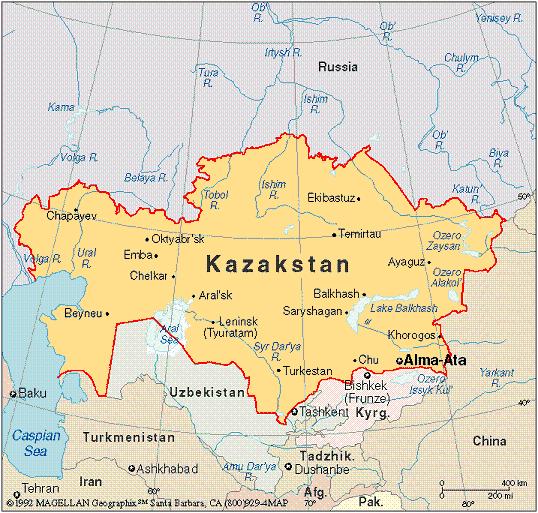
Max Petroleum updated its activities in the Blocks A&E License area in the Republic of Kazakhstan.

Kazakstan
Kazakstan

Preliminary Drilling Results at Asanketken

The ASK-1 exploration well on the Asanketken prospect in Block E has reached an intermediate depth of 2,000 meters with electric logs indicating 24 meters of net oil pay at depths from 1,230 to 1,302 meters in the Jurassic Formation. Reservoir quality is excellent with porosities ranging from 17% to 33%. A fluid sample taken from a depth of 1,278 meters yielded 45 degree API oil. Current mapping and pressure data suggest that reserves in this accumulation are limited by the proximity of a trapping fault, but the Jurassic reservoirs, a secondary objective in the well, are expected to be commercially viable.

The Company will run casing over this portion of the well as planned and continue to drill ahead to a total depth of approximately 3,300 meters to evaluate the primary exploration targets in the lower Triassic section.

Procurement of two additional drilling rigs

The Company has entered into a two-year contract with PM Lucas Enterprises Limited for an IDECO 8055 Rambler rig capable of drilling to 3,200 meters (the "IDECO Rig").

Due to recent weather conditions limiting access to the Uytas Field, the IDECO rig is currently mobilizing to drill the NARS-1 exploration well on the Narmundanak South prospect in Block E, which is expected to spud on or around 20 April 2011.

The Company intends to drill three confirmation wells at Uytas with the IDECO Rig subsequent to drilling the NARS-1 well.

The Company has also awarded a tender to Saipem, a subsidiary of Eni, S.p.A, for a rig to drill its deep pre-salt exploration program and expects to execute a drilling contract shortly.

The Company plans to commence drilling the first pre-salt well, NUR-1, in Block E during August 2011, targeting unrisked mean resource potential of 467 million barrels of oil equivalent (mmboe) distributed over a probable range (P90 to P10) of 170 million to 817 million mmboe with a 29% geological chance of success.

Trial Production at Borkyldakty

The Central Committee for Exploration and Development (CCED) has recommended the trial production project for the Borkyldakty Field to the Committee of Geology for final approval.

This final approval and the issuance of required gas flaring and emissions permits are expected in the next 30-45 days. The Company intends to drill at least one appraisal well at Borkyldakty during the first half of 2011 using the ZJ-30 rig that is currently drilling the first of two Triassic appraisal wells in the Zhana Makat Field.

Robert Holland, Executive Co-Chairman, commented, "We are encouraged to see high quality oil pay in the Jurassic section in Asanketken, which lowers the risk of charge for the well's primary objectives in the lower Triassic. Adding additional rigs, including the deep rig for our pre-salt exploration program, is a key step in our plans to significantly ramp up our exploration, appraisal and development activity in 2011.

We also expect a substantial increase in production and revenues in the near-term as we bring on additional appraisal and development wells in Zhana Makat, Borkyldakty and Uytas."

Thursday, March 31, 2011

Devon Chairman Sees Plenty of Barnett Drilling

Devon Chairman Sees Plenty of Barnett Drilling

Thursday, March 31, 2011
Fort Worth Star-Telegram, Texas
Devon Energy, the largest producer in North Texas' Barnett Shale, has lots of drilling ahead of it in the big natural gas play, Executive Chairman Larry Nichols told the Star-Telegram in a telephone interview.

"We have at least 7,500 undrilled locations," said Nichols, who last year gave up his CEO title after 30 years in the job. Devon plans to keep about a dozen drilling rigs busy in the Barnett this year and will drill perhaps 325 wells, he said.

The Oklahoma City-based company has an office in downtown Fort Worth and 550 employees involved in Barnett Shale operations.

Devon's net Barnett production peaked at the equivalent of 1.2 billion cubic feet of natural gas per day in the fourth quarter last year. As a result of weak gas prices and limited demand, the company will probably maintain production at about that level this year, but it has the capability to increase output to at least 1.5 billion cubic feet Nichols said.

While current natural gas prices of slightly more than $4 per million British thermal units are not sufficiently high for sustaining production levels for "dry gas," it can be sufficient for "wet gas" production, which includes natural gas liquids that generate additional revenue, Nichols said. Devon's Barnett production is a mix of dry and wet gas, he said.

A geologist and lawyer by training, Nichols said he expects continued technological advances in drilling and completion of wells that will result in greater recovery of oil and natural gas.

As an example, he cited major technological advances in horizontal drilling and hydraulic fracturing that -- along with higher oil prices -- have revived activity in West Texas' heavily drilled Permian Basin.

Devon currently has 17 drilling rigs running in the Permian, where the company has about one million acres under lease, Nichols said.

He said he's "very excited" about the company's new 50-story corporate headquarters under construction in Oklahoma City. It will allow the company to consolidate its approximately 1,700 workers in Oklahoma City into a single building. They presently are scattered among five buildings, he said.

All the Devon employees are expected to be in the new building by the end of 2012.